



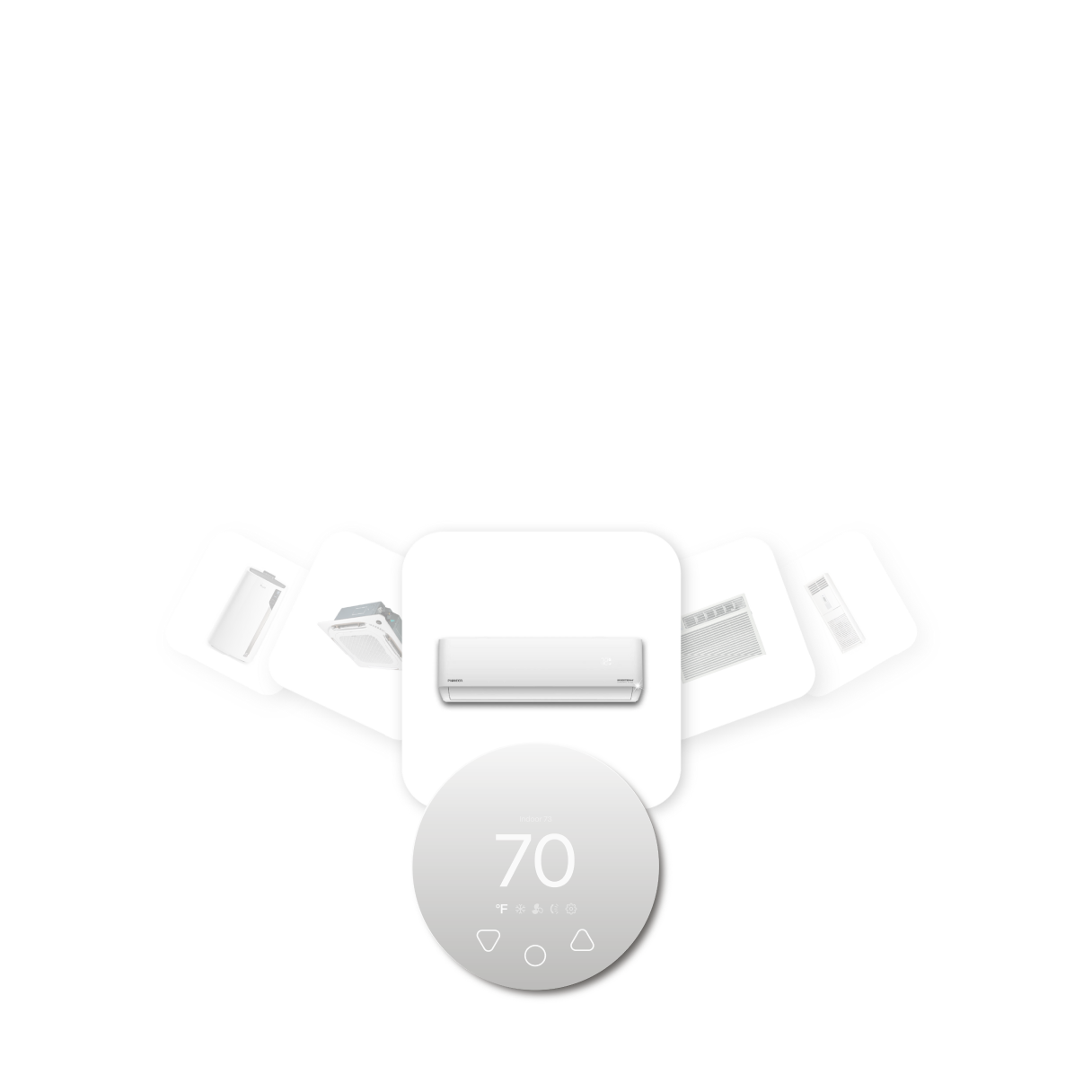



Mini-splits are available in two common indoor unit configurations for residential use: wall-mount (the familiar rectangular unit mounted high on a wall) and ceiling cassette (a recessed unit that sits flush in the ceiling and distributes air in four directions). Both cool and heat equally well — the choice comes down to aesthetics, room layout, installation complexity, and cost. This guide compares them on every relevant factor.
Compatible with all brands of ACs and Mini-Splits
Automate Climate Management
Control remotely
Reduce Energy Consumption
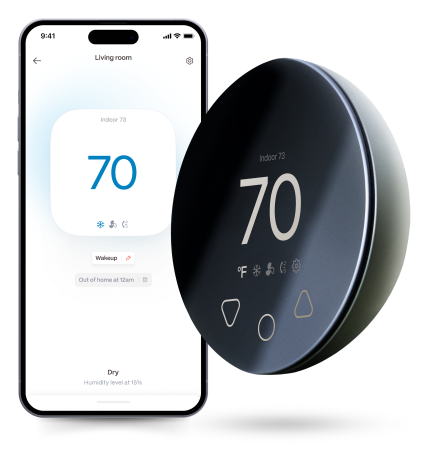
Monitor bills in realtimeKlima - Smart Home Thermostat for Mini-splits, Air Conditioners and Heatpumps
Stay cool and save more. Use code JONES15 to get 15% off your entire order—no strings attached.
Upgrade your comfort with a Klima today.
Side-by-Side Comparison
| Factor | Wall Mount | Ceiling Cassette |
|---|---|---|
| Visibility | Visible on wall — typically white rectangular unit | Nearly invisible — only grille panel visible in ceiling |
| Airflow direction | One direction (adjustable louvres) | Four directions simultaneously — better for square rooms |
| Installation complexity | Simpler — mounts on wall with bracket | More complex — requires ceiling cavity access, framing |
| Installation cost premium | Base cost | $500–$1,500 more than wall mount (labour + framing) |
| Equipment cost premium | Base cost | $300–$800 more than equivalent wall-mount capacity |
| Best for | Most residential rooms, bedrooms, offices | Open-plan living areas, commercial spaces, renovations where aesthetics matter |
| Ceiling height required | 8 feet minimum | 9–10 feet minimum (needs ceiling cavity above grille) |
| Filter access | Easy — front panel lifts down | Requires step ladder; some models have auto-cleaning |
| Noise level | 19–32 dB on low speed | Comparable — 22–35 dB on low speed |
When to Choose a Ceiling Cassette
- Open-plan living areas where four-directional airflow provides better coverage than a single wall-mount throw
- Renovation projects where the interior design cannot accommodate a visible wall unit
- Commercial or hospitality applications where aesthetics and professionalism of appearance matter
- Rooms without a suitable exterior wall for a wall-mount unit
When to Choose a Wall Mount
- Standard residential rooms where aesthetics are not the primary concern
- Budget-conscious installations — wall mounts cost $800–$1,500 less total installed
- Rooms where ceiling cavity access is unavailable or where ceiling height is under 9 feet
- DIY-friendly installations — wall mounts are far more practical for homeowner installation
Frequently Asked Questions
Is a ceiling cassette more efficient than a wall mount?
No — efficiency is determined by the refrigerant circuit, compressor, and SEER2/HSPF2 ratings, not the indoor unit type. A ceiling cassette and a wall mount with identical outdoor units will operate at the same efficiency. The cassette's four-directional airflow distributes conditioned air more evenly across a room, which can improve perceived comfort, but does not change the unit's efficiency rating.
Can I retrofit a ceiling cassette into an existing home?
Yes, if there is accessible ceiling cavity space above the installation location. The cassette body typically requires 12–14 inches of ceiling depth. In homes with attic access or a second floor above, installation is relatively straightforward. In slab-on-grade single-story homes without accessible ceiling space, wall mounts are more practical.
Related reading:
→ Mini-Split Indoor Unit Placement: Where for Best Airflow
→ Mini-Split Installation Cost: What to Expect in 2026
→ Mini-Split for Whole House: Can It Heat and Cool Everything?


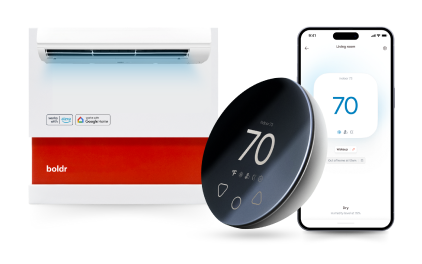
Klima - Smart Home Controller for Mini-splits, Air Conditioners and Heatpumps
Compatible with all brands of ACs and Mini-Splits Automate Climate Management Control remotely Reduce Energy Consumption Monitor bills in realtime
Try NowRecent Articles

Mini-Split Outdoor Unit Clearance 2026 Guide
A mini-split outdoor unit needs air. Lots of it. The condenser pull...
Read More
What Happens if Your Mini-Split Is Too Small?
Most homeowner sizing advice focuses on oversized mini-splits. But ...
Read More
Does a Mini-Split Need a Manual J Load Calculation?
A 500-square-foot room does not automatically need a 12,000 BTU min...
Read More
Signs Your Mini-Split May Have a Refrigerant Leak
A mini-split does not normally “use up” refrigerant the way a car u...
Read More
Mini-Split Minimum Capacity: Why It Matters
When homeowners compare mini-splits, they normally look at the bigg...
Read More