






Dry mode on a mini-split removes humidity from the air without significantly lowering the temperature. It is designed for humid but mild days when the air feels muggy and uncomfortable despite not being particularly hot — the kind of weather where running full cooling mode would make the room too cold. Understanding when and how to use dry mode can meaningfully improve comfort during shoulder-season weather.
How Dry Mode Works
In dry mode, the mini-split runs the compressor at low capacity and cycles it on and off to keep the evaporator coil just below the dew point temperature. Moisture from the room air condenses on the cold coil and drains away through the condensate drain — the same process that removes humidity during normal cooling. The key difference is that dry mode runs the compressor intermittently and at reduced output, so less heat is removed from the air overall.
The fan typically runs at a lower speed in dry mode, further reducing the cooling effect while still moving enough air across the coil to condense moisture.
Dry Mode vs Cool Mode: The Key Differences
| Factor | Cool Mode | Dry Mode |
|---|---|---|
| Primary goal | Lower room temperature | Lower room humidity |
| Compressor operation | Runs continuously at variable capacity | Cycles on/off at low capacity |
| Fan speed | Variable — adjustable by user | Fixed low speed (auto-controlled) |
| Temperature change | Significant — drops room temperature | Minimal — maintains near-current temperature |
| Humidity removal | Yes — but temperature drop is dominant | Yes — humidity reduction is the focus |
| Electricity use | Higher | Lower — intermittent compressor operation |
| Best for | Hot days — temperature is too high | Muggy mild days — humidity is the problem |
When to Use Dry Mode
- Spring and fall days when outdoor temperatures are mild (65–75°F) but humidity is high
- After rain when the air feels damp and sticky
- Overnight when you want to reduce clamminess without over-cooling the bedroom
- Coastal or high-humidity climates where moisture is a persistent issue
When Not to Use Dry Mode
- Hot summer days above 80°F — use COOL mode to bring down both temperature and humidity
- Already-dry climates — running dry mode in low-humidity environments removes what little moisture is in the air, causing discomfort
- When the room temperature is already uncomfortably low — dry mode will not raise the temperature
Frequently Asked Questions
Does dry mode cool a room?
It cools slightly — the coil is still below ambient temperature, so some heat is removed from the air passing over it. However, the temperature drop is minimal compared to cool mode. The dominant effect is humidity reduction, not temperature reduction. On a 90°F day, dry mode will not provide meaningful comfort — use cool mode instead.
Is dry mode cheaper to run than cool mode?
Yes. Dry mode cycles the compressor at low capacity rather than running it continuously. Electricity consumption in dry mode is typically 30–50% lower than in cool mode. This makes it a cost-effective option for mild-but-humid conditions where full cooling is not needed.
Can I use dry mode instead of a dehumidifier?
For mild humidity control in a single room, yes. Dry mode on a mini-split removes moisture effectively for shoulder-season comfort. A dedicated dehumidifier is more appropriate for aggressive moisture control (basements, crawlspaces, water damage recovery) where significantly higher dehumidification rates are needed without any temperature change.
Related reading:
→ Mini-Split Dehumidifier Mode: How It Works and When to Use It
→ Mini-Split Auto Mode Explained: What Does It Actually Do?
→ Mini-Split Not Cooling? 10 Reasons and How to Fix


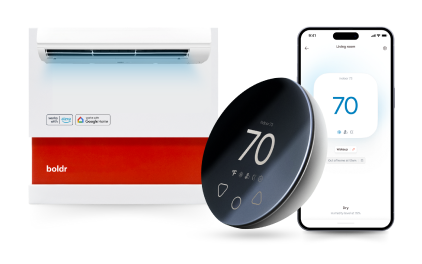
Klima - Smart Home Controller for Mini-splits, Air Conditioners and Heatpumps
Compatible with all brands of ACs and Mini-Splits Automate Climate Management Control remotely Reduce Energy Consumption Monitor bills in realtime
Try NowRecent Articles

Mini-Split Outdoor Unit Clearance 2026 Guide
A mini-split outdoor unit needs air. Lots of it. The condenser pull...
Read More
What Happens if Your Mini-Split Is Too Small?
Most homeowner sizing advice focuses on oversized mini-splits. But ...
Read More
Does a Mini-Split Need a Manual J Load Calculation?
A 500-square-foot room does not automatically need a 12,000 BTU min...
Read More
Signs Your Mini-Split May Have a Refrigerant Leak
A mini-split does not normally “use up” refrigerant the way a car u...
Read More
Mini-Split Minimum Capacity: Why It Matters
When homeowners compare mini-splits, they normally look at the bigg...
Read More