






A workshop presents unique climate control challenges — high heat load from equipment and people, dust and airborne particles from cutting and sanding, and often poor insulation in detached buildings. A mini-split handles all of this well with the right sizing and a few protective measures. Most workshops need 12,000–24,000 BTU depending on size, insulation, and heat-generating equipment. This guide covers everything you need to set up climate control in a workshop.
Compatible with all brands of ACs and Mini-Splits
Automate Climate Management
Control remotely
Reduce Energy Consumption
Monitor bills in realtimeKlima - Smart Home Thermostat for Mini-splits, Air Conditioners and Heatpumps

Sizing a Mini-Split for a Workshop
| Workshop Size | Insulation | Recommended BTU |
|---|---|---|
| 200–300 sq ft | Well insulated | 9,000–12,000 BTU |
| 200–300 sq ft | Poorly insulated / metal building | 12,000–18,000 BTU |
| 400–600 sq ft | Well insulated | 12,000–18,000 BTU |
| 400–600 sq ft | Poorly insulated / metal building | 18,000–24,000 BTU |
| 600–1,000 sq ft | Any | 24,000–36,000 BTU |
Add 15–25% to BTU requirements for workshops with heat-generating equipment (welders, large compressors, laser cutters, kilns) that run simultaneously with the climate system.
Dust Protection
Woodworking and metalworking workshops produce significant airborne dust and particles. While mini-split filters catch large particles, fine dust accumulates on the indoor coil over time, reducing airflow and efficiency. Two protective measures help:
- Filter more often: Clean the indoor unit filter monthly (vs every 2 weeks in a home) and inspect the indoor coil annually for dust accumulation.
- Pre-filter: Some workshop users add a thin polyester pre-filter over the indoor unit's intake grille to catch coarser dust before it reaches the mesh filter. Remove and clean it more frequently than the main filter.
- Run dust collection before the mini-split: Allow dust collection systems to clear the air before turning on the mini-split after heavy cutting or sanding.
Heating in Cold Climates
Workshops in cold climates benefit from cold-climate mini-split models rated to −13°F. A workshop that is used year-round in northern US or Canada needs reliable heating on the coldest days — standard models lose significant capacity below 0°F. Cold-climate models from Mitsubishi, Daikin, LG, and Fujitsu maintain meaningful heating output in these conditions.
Frequently Asked Questions
Is a mini-split good for a woodworking shop?
Yes — with regular filter cleaning. A mini-split provides quiet, efficient climate control without the ductwork complexity of a central system. The main maintenance consideration is more frequent filter cleaning due to sawdust. Many woodworkers use their mini-split on a schedule — running it while working and cleaning the filter at the end of each work session.
Can I use a mini-split in a metal building workshop?
Yes, but metal buildings have very high heat gain in summer and heat loss in winter due to minimal insulation. Size up — typically 25–35% more BTU than you would size for a stick-built building of the same square footage. Adding insulation to the metal building before installing the mini-split is the highest-value investment you can make.
Related reading:
→ Mini-Split for Garage: Sizing, Cost and Best Picks
→ Mini-Split for Shed: What Size and Cost to Expect
→ How Much Does a Mini-Split Cost? Full 2026 Guide


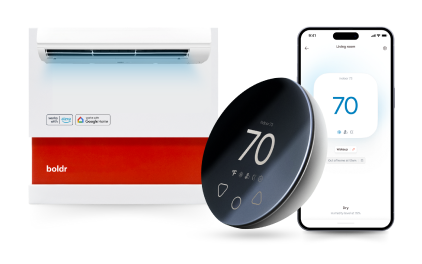
Klima - Smart Home Controller for Mini-splits, Air Conditioners and Heatpumps
Compatible with all brands of ACs and Mini-Splits Automate Climate Management Control remotely Reduce Energy Consumption Monitor bills in realtime
Try NowRecent Articles

Mini-Split Outdoor Unit Clearance 2026 Guide
A mini-split outdoor unit needs air. Lots of it. The condenser pull...
Read More
What Happens if Your Mini-Split Is Too Small?
Most homeowner sizing advice focuses on oversized mini-splits. But ...
Read More
Does a Mini-Split Need a Manual J Load Calculation?
A 500-square-foot room does not automatically need a 12,000 BTU min...
Read More
Signs Your Mini-Split May Have a Refrigerant Leak
A mini-split does not normally “use up” refrigerant the way a car u...
Read More
Mini-Split Minimum Capacity: Why It Matters
When homeowners compare mini-splits, they normally look at the bigg...
Read More