



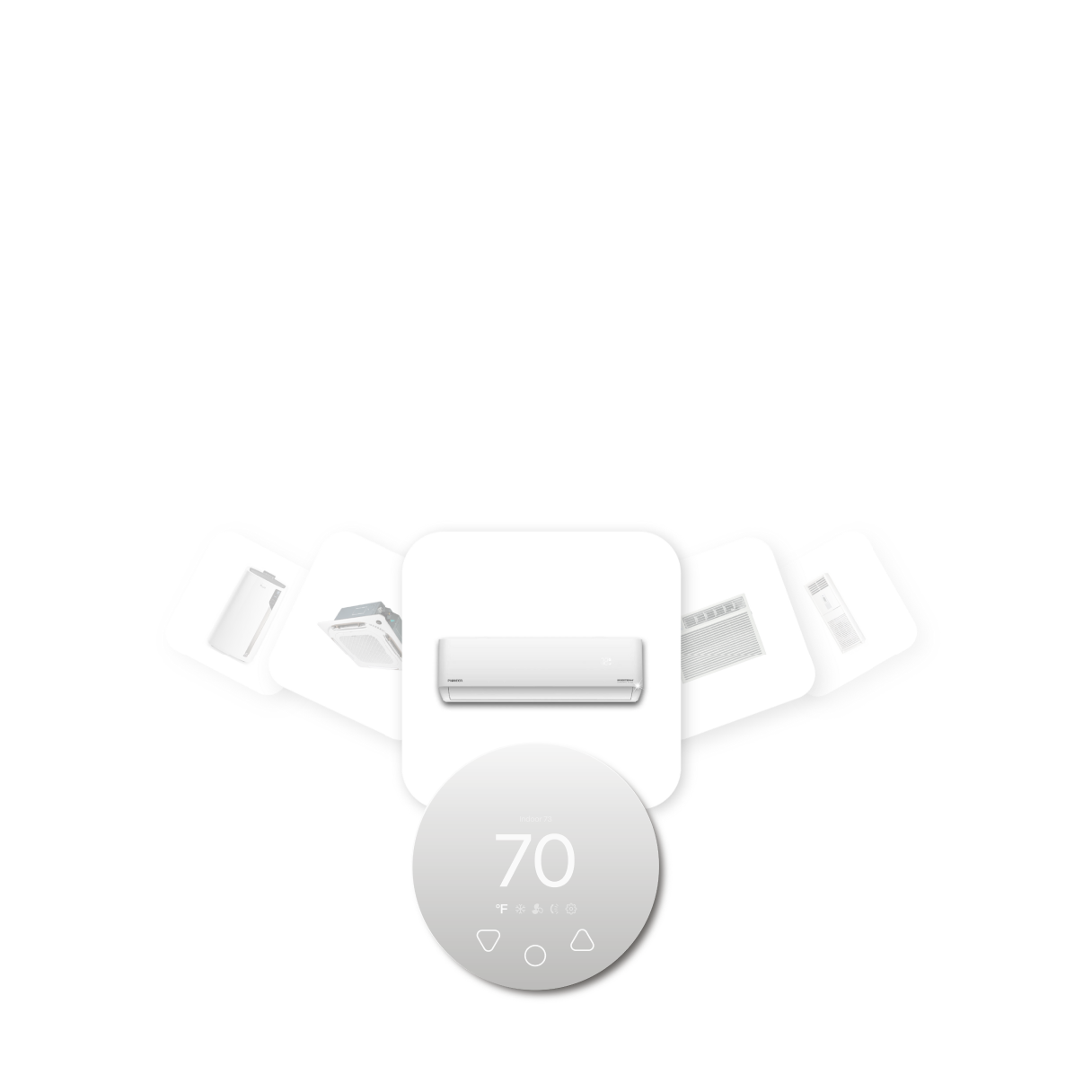



Mini-split zoning is the ability to heat or cool individual rooms or areas independently — each zone has its own indoor unit, its own temperature setpoint, and its own on/off schedule. This is one of the most significant practical advantages of ductless systems over central forced air, where a single thermostat controls the entire house. Understanding how zoning works — and how to design a system around your household's actual needs — is key to getting the most out of a multi-zone mini-split investment.
How Mini-Split Zoning Works
In a multi-zone mini-split system, one outdoor compressor unit connects to 2–5 or more indoor units via refrigerant line sets. Each indoor unit operates independently — it has its own remote control, its own temperature sensor, and its own setpoint. Zones can be:
- Running in cooling mode while another is in heating mode (some systems; check manufacturer specs)
- Running at different temperatures simultaneously (each zone maintains its own setpoint)
- Turned off completely while others run (the outdoor unit modulates to serve only active zones)
Single-Zone vs Multi-Zone Systems
| Factor | Single-Zone | Multi-Zone |
|---|---|---|
| Outdoor units | One per indoor unit | One outdoor unit for 2–5+ indoor units |
| Equipment cost | Lower per zone | Lower overall for 3+ zones (shared outdoor unit) |
| Outdoor unit space | One unit per zone (multiple outdoor units) | One outdoor unit for all zones (less yard space) |
| Independence if outdoor unit fails | Only that zone is affected | All zones on that outdoor unit are affected |
| Best for | 1–2 zones; additions; supplements | Whole-home systems; 3+ zones |
How to Design Zones for Your Home
The basic rule: Each room with a door needs its own zone. Open-plan spaces (kitchen-living-dining that flows together without doors) can share one zone. A typical 3-bedroom home needs 4–5 zones: living area, kitchen (if separated), bedroom 1, bedroom 2, bedroom 3.
Practical zone groupings:
- Living + dining (open plan): One unit positioned to serve both
- Each bedroom: One unit per room — occupants control their own temperature
- Home office: Separate zone if used during hours when the rest of the house is unoccupied
- Basement: Separate zone — basements have different thermal characteristics than above-grade spaces
Multi-Zone System Efficiency
A multi-zone outdoor unit modulates its output based on how many zones are active and what each zone demands. When only one zone is calling for cooling, the outdoor unit runs at low capacity — efficiently matching output to demand. When all zones call simultaneously, the unit runs at higher capacity. Most multi-zone systems are slightly less efficient per zone than equivalent single-zone systems, but the tradeoff in space savings (fewer outdoor units) and cost (shared compressor) makes multi-zone the standard approach for whole-home systems.
Frequently Asked Questions
Can I add zones to an existing mini-split?
Not to a single-zone system — a single-zone outdoor unit is sized for one indoor unit and cannot be expanded. To add zones, you would either install additional single-zone systems (each with their own outdoor unit) or replace the outdoor unit with a multi-zone unit capable of serving multiple indoor units. The latter requires replacing the outdoor unit and reusing or replacing line sets.
How many zones can one outdoor unit support?
Most residential multi-zone outdoor units support 2–5 indoor units. Some commercial-grade or large-capacity units support 6–8 indoor units. The total connected indoor unit BTU capacity must stay within the outdoor unit's rated capacity range — typically 80–125% of the outdoor unit's rated BTU, depending on the manufacturer.
Related reading:
→ Mini-Split for Whole House: Can It Heat and Cool Everything?
→ Mini-Split Cost Per Zone: Multi-Zone Pricing Guide
→ Mini-Split Sizing Guide: How to Choose the Right BTU


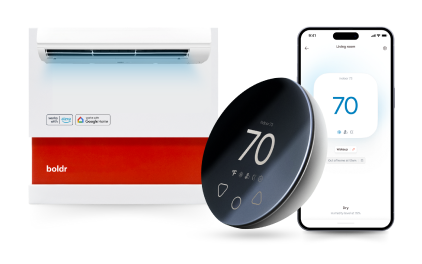
Klima - Smart Home Controller for Mini-splits, Air Conditioners and Heatpumps
Compatible with all brands of ACs and Mini-Splits Automate Climate Management Control remotely Reduce Energy Consumption Monitor bills in realtime
Try NowRecent Articles

Mini-Split Outdoor Unit Clearance 2026 Guide
A mini-split outdoor unit needs air. Lots of it. The condenser pull...
Read More
What Happens if Your Mini-Split Is Too Small?
Most homeowner sizing advice focuses on oversized mini-splits. But ...
Read More
Does a Mini-Split Need a Manual J Load Calculation?
A 500-square-foot room does not automatically need a 12,000 BTU min...
Read More
Signs Your Mini-Split May Have a Refrigerant Leak
A mini-split does not normally “use up” refrigerant the way a car u...
Read More
Mini-Split Minimum Capacity: Why It Matters
When homeowners compare mini-splits, they normally look at the bigg...
Read More