







A mini-split "overheating" typically refers to the outdoor unit's compressor or heat exchanger reaching temperature levels that trigger the system's high-temperature protection — shutting the compressor down to prevent damage. This is most commonly caused by restricted airflow around the outdoor unit or a dirty outdoor coil, and manifests as an E1, E4, or similar high-pressure/overload error code. This guide covers causes, prevention, and fixes.
Compatible with all brands of ACs and Mini-Splits
Automate Climate Management
Control remotely
Reduce Energy Consumption
Monitor bills in realtimeKlima - Smart Home Thermostat for Mini-splits, Air Conditioners and Heatpumps
What "Overheating" Actually Means in a Mini-Split
Mini-splits do not overheat the way an engine does — they have temperature sensors that monitor the compressor discharge temperature and the outdoor heat exchanger temperature. When these exceed their rated limits, the system shuts down via a protection code rather than continuing to run at dangerous temperatures. This protection prevents compressor damage but also stops heating or cooling until the root cause is resolved.
Common Causes of Outdoor Unit Overheating
| Cause | Error Code | DIY Fix? | Action |
|---|---|---|---|
| Blocked outdoor unit airflow (vegetation, fence, debris) | E1, E4, P8 | Yes | Clear all obstructions; ensure 12" clearance all sides, 24" front |
| Dirty outdoor condenser coil | E1, E4 | Yes | Rinse coil with garden hose (low pressure); let dry; restart |
| Unit in direct, enclosed sun without airflow | E1, E4 | Partially | Add shade structure; improve ventilation around unit |
| Outdoor fan motor failing | E3, E7 | No | Call technician — fan motor inspection and replacement |
| Refrigerant overcharge | E1 | No | Call EPA-certified technician — refrigerant recovery to correct charge |
| Non-condensable gas in refrigerant circuit | E1 | No | Call technician — system must be evacuated and recharged |
Prevention
- Annual coil cleaning: Rinse the outdoor condenser coil with a garden hose every spring before the cooling season. Cottonwood, pollen, and grass clippings accumulate on the coil fins and significantly reduce heat rejection capacity.
- Maintain clearances: Check that vegetation, fences, or stored items have not encroached on the required clearance zones around the outdoor unit. Shrubs grow — what was 18 inches of clearance three years ago may now be 6 inches.
- Check the outdoor fan: During a cooling cycle, the outdoor fan should be spinning. If it is not spinning with the compressor running, the heat exchanger will overheat rapidly.
Frequently Asked Questions
My mini-split overheats only on very hot days — what does that mean?
Intermittent overheating only in extreme heat (above 35°C / 95°F) often indicates a partially clogged condenser coil or marginal airflow that is adequate in moderate temperatures but insufficient when the coil is working hardest. Clean the outdoor coil and verify clearances. If overheating continues on hot days after cleaning, the unit may be slightly undersized for peak conditions or the refrigerant charge may need verification.
Related reading:
→ Mini-Split E1 Error Code: Causes and Fixes for Every Brand
→ Mini-Split Outdoor Unit Not Running: How to Diagnose
→ Mini-Split Coil Cleaning: Step-by-Step Guide


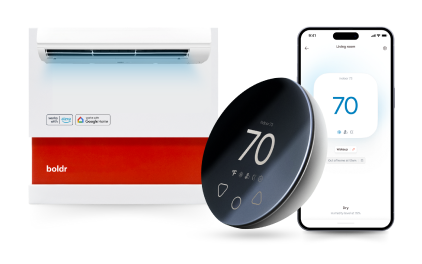
Klima - Smart Home Controller for Mini-splits, Air Conditioners and Heatpumps
Compatible with all brands of ACs and Mini-Splits Automate Climate Management Control remotely Reduce Energy Consumption Monitor bills in realtime
Try NowRecent Articles

Mini-Split Outdoor Unit Clearance 2026 Guide
A mini-split outdoor unit needs air. Lots of it. The condenser pull...
Read More
What Happens if Your Mini-Split Is Too Small?
Most homeowner sizing advice focuses on oversized mini-splits. But ...
Read More
Does a Mini-Split Need a Manual J Load Calculation?
A 500-square-foot room does not automatically need a 12,000 BTU min...
Read More
Signs Your Mini-Split May Have a Refrigerant Leak
A mini-split does not normally “use up” refrigerant the way a car u...
Read More
Mini-Split Minimum Capacity: Why It Matters
When homeowners compare mini-splits, they normally look at the bigg...
Read More