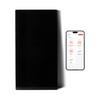







The 5 Best Ductless Mini Split Air Conditioners of 2026
Ductless mini split air conditioners have become one of the most efficient and flexible ways to heat and cool a home. With rising energy costs and improvements in ductless A/C technology, 2026 is one of the best times yet to install a mini split system.
Below we break down the five best ductless mini split air conditioners available in 2026, explain how to choose the right one for your home, and show how you can upgrade any ductless system using a smart controller like Klima.
Why You Should Buy a Ductless Mini Split in 2026
A ductless mini split moves heat between an outdoor compressor and a wall-mounted indoor head through a small refrigerant line. Unlike traditional central air systems, it requires no ductwork.
That has several advantages.
First, ductless A/C mini-split systems eliminate energy losses from ducts. The U.S. Department of Energy estimates that duct losses can account for roughly 30% of a central HVAC system’s energy consumption.
Second, mini-splits are much easier to install than central systems. Instead of installing bulky ducts, technicians only need a small wall penetration for the refrigerant line.
They also function as heat pumps, meaning they can both cool and heat your home. In summer, they pull heat out of indoor air. In winter, they reverse the process and bring heat inside.
Modern systems now operate efficiently in extremely cold climates. The best ductless mini-split units can heat homes even when outdoor temperatures fall to -15°F, making them viable primary heating systems in regions like the Northeast and Upper Midwest.
Pricing varies widely:
-
$700–$1,000 for budget equipment
-
$3,000–$5,000+ installed for premium systems
Keep in mind that most mini splits require professional installation, typically adding $1,500–$3,000 to the total cost. The only system on this list designed for homeowner installation is MRCOOL.
The 5 Best Ductless Mini Split Air Conditioners of 2026
We evaluated mini splits based on seven factors:
-
Cooling and heating performance
-
Efficiency ratings (SEER2, HSPF2, EER2)
-
Indoor noise levels
-
Smart home compatibility
-
Installation complexity
-
Warranty coverage
-
Overall performance relative to price
Here are the best mini split systems available this year.
1. Mitsubishi MSZ-FS Deluxe — The Best Ductless Air Conditioner
The Mitsubishi MSZ-FS Deluxe stands out for one major reason: its advanced i-see 3D infrared sensor.
This sensor continuously scans the room to detect temperature differences and where people are located. The system can then direct airflow toward occupants for comfort or away from them for more subtle cooling.
This level of intelligent airflow control is unmatched among single-room wall-mounted mini splits.
Performance numbers are equally impressive:
-
Up to 33.1 SEER efficiency
-
13.5 HSPF heating performance
-
Indoor noise as low as 20 dB
Mitsubishi also includes Dual Barrier Coating, which protects internal components from dust and grease buildup so efficiency stays high over time.
The system also features triple filtration:
-
Nano Platinum filter
-
Electrostatic filter
-
Anti-Allergy Enzyme filter
These help remove airborne particles and allergens without needing a separate air purifier.
For cold climates, the Hyper-Heat variant can operate down to -13°F.
Key specs
|
Capacity |
Coverage |
SEER |
Noise |
Warranty |
|
6,000–18,000 BTU |
250–800 sq ft |
Up to 33.1 |
20 dB |
10 years |
Best for: homeowners who want the best comfort, performance, and air filtration available.
2. Fujitsu Airstage LZAS1 — Best Mini Split for Maximum Efficiency
If pure efficiency is your priority, the Fujitsu Airstage LZAS1 is hard to beat.
The 9K BTU version matches Mitsubishi’s 33.1 SEER2 rating, but actually surpasses it in heating efficiency with a 14.2 HSPF2 rating — one of the highest available in residential mini splits.
For homes that rely heavily on heat pumps during winter, that can translate into meaningful monthly savings.
Fujitsu’s XLTH (Extra Low Temperature Heating) variants operate down to -15°F, making them ideal for cold climates.
Other notable features include:
-
Indoor noise as low as 19 dB
-
Ion deodorizing filtration
-
Pricing often $500–$1,000 lower than Mitsubishi
The main drawback is a smaller U.S. dealer network, which can sometimes mean slower access to parts depending on your location.
Key specs
|
Capacity |
Coverage |
SEER2 |
Noise |
Warranty |
|
9,000–15,000 BTU |
350–600 sq ft |
Up to 33.1 |
19 dB |
Up to 10 years |
Best for: homeowners who want the highest efficiency and lowest long-term energy costs.
3. Daikin LV Series — Best Mini Split for Air Quality
While Daikin’s LV Series doesn’t top the efficiency charts, it excels in air quality and environmental design.
One key advantage is the use of R-32 refrigerant, which has a lower global warming potential than the older R-410A refrigerant still used by many competitors.
The system also features a Titanium Apatite Photocatalytic Air Purifying Filter, which breaks down:
-
odors
-
dust
-
allergens
Unlike basic filters that simply trap particles, this filter chemically neutralizes contaminants.
Another highlight is Daikin’s Intelligent Eye sensor, which detects when a room is empty and automatically reduces energy consumption.
During testing, this feature reduced energy use by 20–25% in rooms that were unoccupied during the day.
Key specs
|
Capacity |
Coverage |
SEER2 |
Noise |
Warranty |
|
9,000–24,000 BTU |
350–1,500 sq ft |
19.5–21 |
31–37 dB |
10–12 years |
Best for: homeowners focused on indoor air quality and environmental performance.
4. MRCOOL DIY 5th Gen — Best Mini Split for DIY Installation
The MRCOOL DIY 5th Gen is unique because it’s designed for homeowner installation.
Most mini split manufacturers void the warranty if you install the unit yourself. MRCOOL does the opposite.
The system uses pre-charged quick-connect refrigerant lines, which eliminate the need for vacuum pumps or refrigerant gauges.
The DIYPRO cable also removes the need for electrical conduit.
In testing, this can save $1,500–$2,500 in installation costs.
Efficiency is also solid:
-
Up to 24 SEER2
-
ENERGY STAR certified on several models
-
Corrosion-resistant Gold Fin coating
However, the system still uses R-410A refrigerant and indoor units are slightly bulkier than premium brands.
Key specs
|
Capacity |
Coverage |
SEER2 |
Noise |
Warranty |
|
12,000–36,000 BTU |
550–1,550 sq ft |
Up to 24 |
34–40 dB |
Lifetime compressor |
Best for: homeowners comfortable with DIY installation who want to avoid expensive installation costs.
5. Senville LETO — Best Budget Mini Split
If price is your primary concern, the Senville LETO delivers impressive performance for the money.
The 30K BTU model offers:
-
18.6 SEER efficiency
-
Built-in Wi-Fi
-
Amazon Alexa voice control
Across the lineup (9K–30K BTU), efficiency ranges from 18 to 25+ SEER.
Pricing starts around $700, making it one of the most affordable ductless mini splits available.
Of course, there are trade-offs:
-
shorter 5-year warranty
-
slightly higher noise levels
-
fewer smart home integrations on some models
Still, for guest rooms, garages, or bonus spaces, the LETO offers excellent value.
Key specs
|
Capacity |
Coverage |
SEER |
Noise |
Warranty |
|
9,000–30,000 BTU |
400–1,500 sq ft |
18–25+ |
35–52 dB |
5 years |
Best for: budget buyers who still want strong cooling performance.

How to Choose the Right Mini Split
Selecting the right mini split depends on three main factors.
1. Correct Sizing
A good rule of thumb is 20 BTU per square foot.
Examples:
-
300 sq ft bedroom: ~6,000 BTU
-
500 sq ft living room: 9,000–12,000 BTU
Increase capacity by 10–15% if the room has:
-
high ceilings
-
strong sun exposure
-
poor insulation
-
very hot climates
Oversized systems cycle too frequently and waste energy, while undersized systems run constantly.
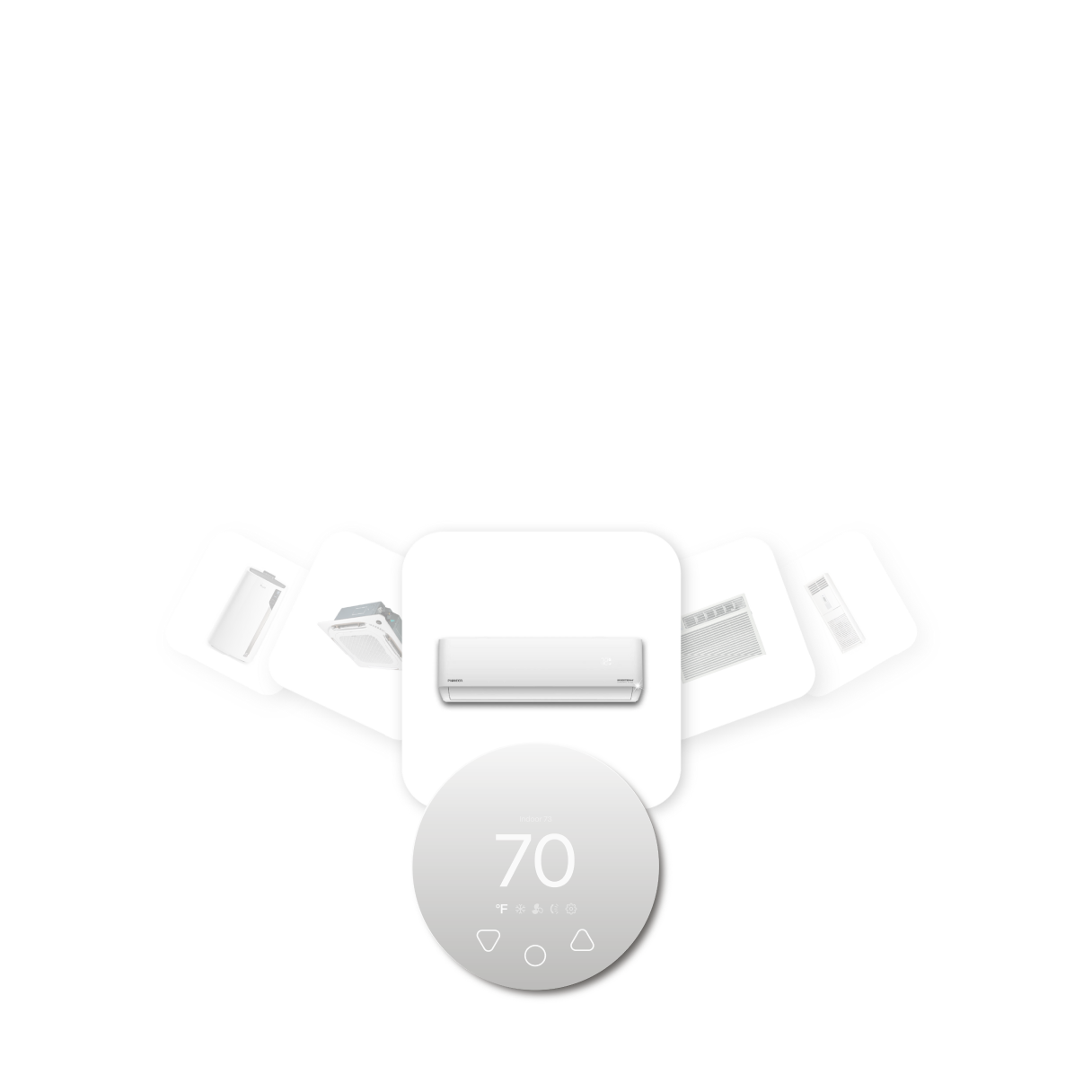
Compatible with all brands of ACs and Mini-Splits
Automate Climate Management
Control remotely
Reduce Energy Consumption
Monitor bills in realtimeKlima - Smart Home Thermostat for Mini-splits, Air Conditioners and Heatpumps
2. Efficiency Ratings
Efficiency of your mini-split is measured using SEER2 ratings.
The federal minimum is 14.3 SEER2, but higher ratings can significantly reduce electricity use.
For example:
-
Moving from 14 SEER2 to 20 SEER2 can reduce cooling energy by about 29%.
That can translate into $80–$150 in annual energy savings.
Also note the 30% federal heat pump tax credit (up to $2,000 per year) available through 2032.
3. Single-Zone vs Multi-Zone
-
Single-zone mini-split systems cool one room with one indoor unit.
-
Multi-zone mini-split systems connect several indoor heads to one outdoor compressor.
Single-zone systems are more affordable and simpler to install. Multi-zone mini-split systems are ideal for whole-home heating and cooling.

How to Make Your Mini Split Smart with Klima
Most mini splits rely on basic infrared remotes and limited automation.
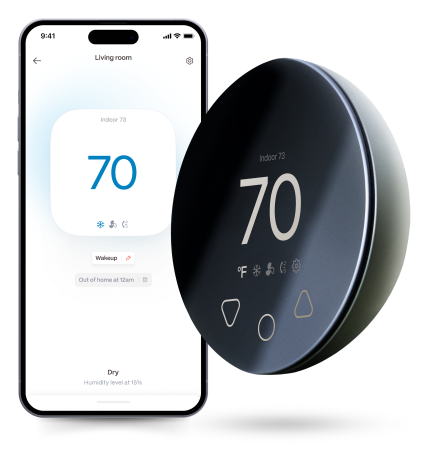
Klima upgrades your mini-split system into a fully connected smart home device.
Klima is a smart controller designed specifically for ductless mini splits.
Once installed, it connects your mini split to the Boldr Energy app, allowing you to control your ductless system directly from your phone.
Instead of treating your mini split as a standalone appliance, Klima turns it into an intelligent home climate system.
Klima’s Smart Features
Klima includes a range of smart home automation tools designed to improve comfort and reduce energy waste.
1. Remote Access
Control your mini split from anywhere using the Boldr Energy app.
Whether you're across town or traveling internationally, you can adjust settings instantly.
2. Location Sensing Automation
Klima automatically detects when everyone leaves home and shuts your mini split system off to save energy.
When someone returns, the system turns back on so the home is comfortable.

3. Smart Scheduling Automation
Schedule your mini split hour by hour based on your routine.
Your home stays comfortable when needed while reducing unnecessary energy use.
4. Health Monitoring
Klima continuously monitors your mini split system.
If a potential issue appears, the Boldr Energy app alerts you, helping prevent costly repairs.
5. Household Management
Share access with family members or guests.
Each person can adjust temperatures or receive full control depending on permissions.
6. Cost Monitoring
Klima tracks real-time energy usage and predicts your monthly energy bill, helping you make smarter energy decisions.
Klima’s Smart Home Compatibility
Klima works with all ductless air conditioner models and integrates with:
-
Apple Home
-
Apple HomeKit
-
Google Home
-
Google Assistant
-
Home Assistant
-
Amazon Alexa
Everything can be managed directly from your smartphone.

Conclusion
Ductless mini splits continue to improve every year, and the 2026 generation delivers exceptional efficiency, comfort, and cold-weather performance.
The best systems include:
-
Mitsubishi MSZ-FS Deluxe — best overall performance
-
Fujitsu Airstage LZAS1 — highest efficiency
-
Daikin LV Series — best air purification
-
MRCOOL DIY 5th Gen — easiest installation
-
Senville LETO — best value
No matter which system you choose, adding a smart controller like Klima can dramatically improve convenience and energy efficiency.
With mobile control, automation, and cost monitoring, your mini split becomes a fully integrated part of your smart home.
FAQ
Are ductless mini splits worth it in 2026?
Yes. Mini splits are one of the most energy-efficient heating and cooling solutions available. They eliminate duct losses and can reduce electricity consumption significantly compared with central HVAC systems.
How long do mini split systems last?
Most high-quality systems last 15–20 years with proper maintenance.
Can mini splits heat a home in winter?
Yes. Modern heat pump mini splits can operate at temperatures as low as -15°F, making them effective primary heating systems in many climates.
Can you install a mini split yourself?
Most manufacturers require professional installation to maintain warranty coverage. The MRCOOL DIY series is one of the few designed specifically for homeowner installation.
Can you make a mini split smart?
Yes. Smart controllers like Klima add features like mobile control, scheduling, geofencing automation, and energy monitoring to almost any ductless mini split system.


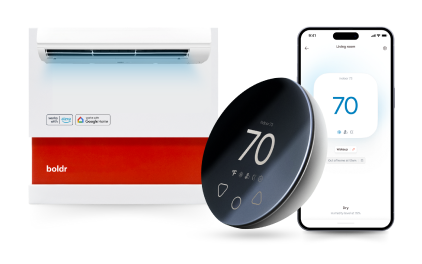
Klima - Smart Home Controller for Mini-splits, Air Conditioners and Heatpumps
Compatible with all brands of ACs and Mini-Splits Automate Climate Management Control remotely Reduce Energy Consumption Monitor bills in realtime
Try NowRecent Articles

Mini-Split Outdoor Unit Clearance 2026 Guide
A mini-split outdoor unit needs air. Lots of it. The condenser pull...
Read More
What Happens if Your Mini-Split Is Too Small?
Most homeowner sizing advice focuses on oversized mini-splits. But ...
Read More
Does a Mini-Split Need a Manual J Load Calculation?
A 500-square-foot room does not automatically need a 12,000 BTU min...
Read More
Signs Your Mini-Split May Have a Refrigerant Leak
A mini-split does not normally “use up” refrigerant the way a car u...
Read More
Mini-Split Minimum Capacity: Why It Matters
When homeowners compare mini-splits, they normally look at the bigg...
Read More