




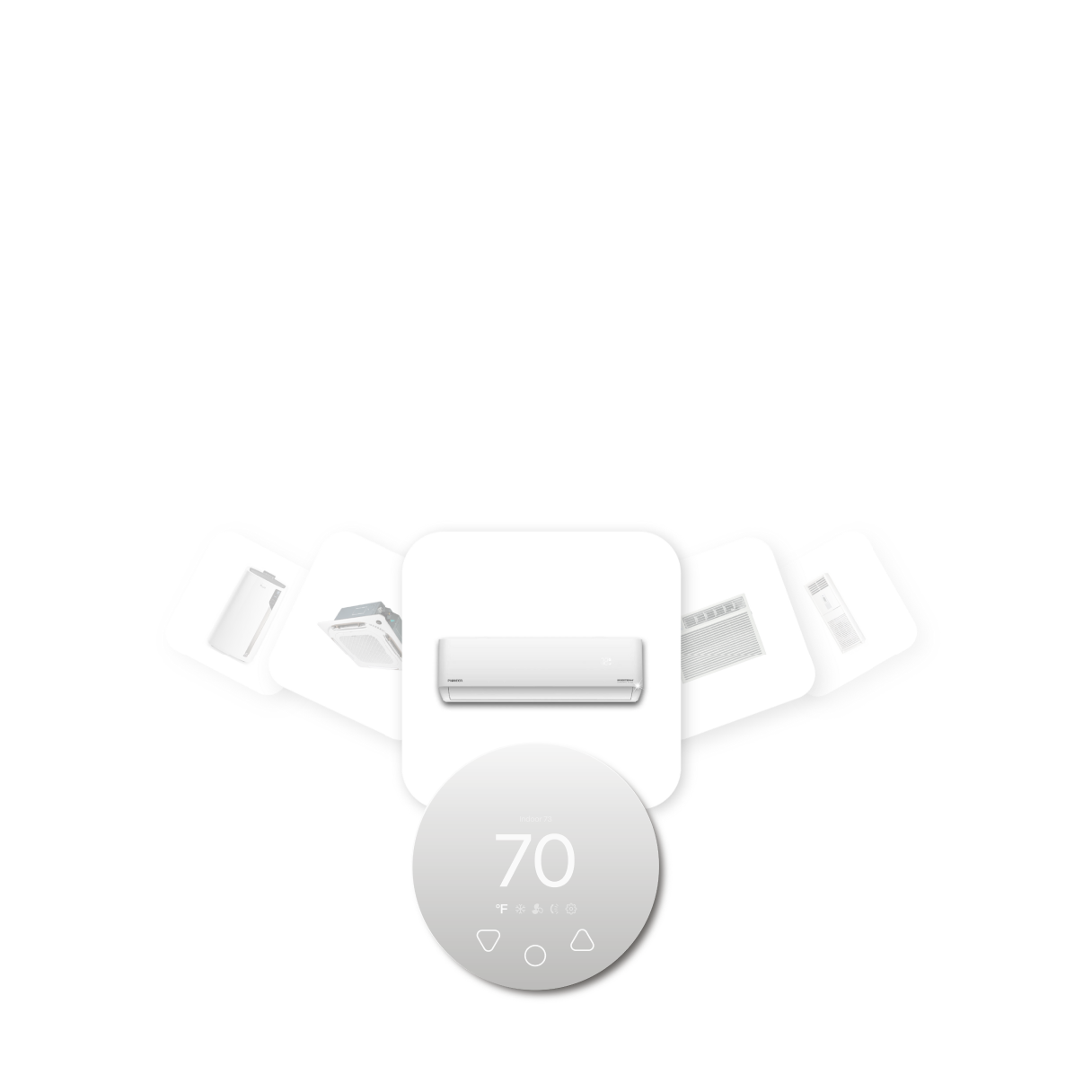



This guide answers the 30 most common questions homeowners ask about ductless mini-splits — from basic operation and installation to cost, efficiency, and maintenance. Use it as a quick reference or share it with anyone considering a mini-split for the first time.
Compatible with all brands of ACs and Mini-Splits
Automate Climate Management
Control remotely
Reduce Energy Consumption
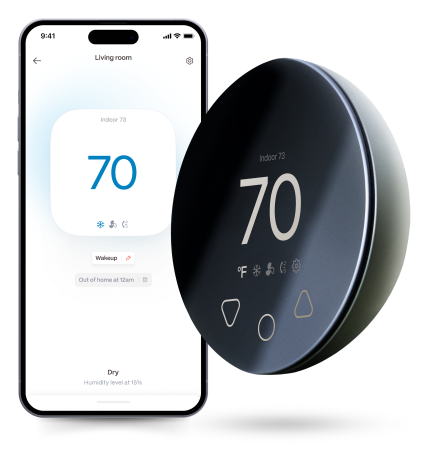
Monitor bills in realtimeKlima - Smart Home Thermostat for Mini-splits, Air Conditioners and Heatpumps
Basic Operation
1. What is a ductless mini-split?
A ductless mini-split is a heating and cooling system consisting of two units — an indoor air handler mounted on a wall and an outdoor compressor — connected by a refrigerant line set through a small wall penetration. It conditions individual rooms without requiring ductwork.
2. How does a mini-split work?
In cooling mode, the system moves heat from inside your home to the outdoors using a refrigerant circuit. In heating mode, it reverses direction, extracting heat from outdoor air and moving it inside. The compressor in the outdoor unit drives the refrigerant circulation.
3. Can a mini-split heat AND cool?
Yes. All standard mini-splits are reverse-cycle heat pumps — they both heat and cool using the same equipment. You switch between modes on the remote control.
4. How do I control a mini-split?
Using the included infrared remote control. Many models also support WiFi-enabled apps, voice assistants (Alexa, Google Home), and smart AC controllers that add remote control to any mini-split.
5. What modes does a mini-split have?
Most mini-splits have COOL, HEAT, DRY (dehumidify), FAN ONLY, and AUTO modes. Fan speed is usually adjustable from Low through High with an AUTO setting.
6. What is dry mode?
Dry mode removes humidity from the air without significantly cooling it — useful on mild but muggy days. The compressor runs at low intermittent capacity, condensing moisture from the air without dropping room temperature significantly.
7. What is auto mode?
Auto mode lets the system decide whether to heat or cool based on comparing room temperature to your setpoint. It is useful during shoulder seasons when mornings are cool and afternoons are warm.
Sizing and Selection
8. What size mini-split do I need?
Start with 20 BTU per square foot as a baseline. Adjust upward for high ceilings, poor insulation, or heavy sun exposure. A typical bedroom needs 9,000 BTU; a large open-plan living area may need 18,000–24,000 BTU.
9. What is SEER2 and why does it matter?
SEER2 is the US efficiency rating for cooling. Higher SEER2 = more cooling per dollar of electricity. Look for 18+ SEER2 for meaningful energy savings.
10. What is HSPF2?
HSPF2 is the efficiency rating for heat pump heating mode. Higher HSPF2 = lower heating costs. In cold climates, HSPF2 has as much impact on your electricity bill as SEER2.
11. What is a cold-climate mini-split?
A mini-split with enhanced compressor technology (enhanced vapor injection) that maintains heating output at outdoor temperatures down to −25°C (−13°F) or lower. Required for primary heating in northern US and Canadian climates.
12. Single-zone or multi-zone — which do I need?
Single-zone for one room. Multi-zone for 2–5+ rooms sharing one outdoor unit. Multi-zone is more cost-effective than multiple single-zone systems for 3+ rooms.
Installation
13. Can I install a mini-split myself?
The MrCool DIY series uses pre-charged quick-connect line sets and can be installed by a capable homeowner for the mechanical portions. Standard mini-splits require an EPA-certified technician for refrigerant work. The electrical circuit always requires a licensed electrician.
14. How long does installation take?
4–8 hours for a single-zone system by a professional contractor, plus 2–3 hours for a licensed electrician to install the dedicated circuit. Multi-zone whole-home systems take 1–3 days.
15. Do I need a permit?
Yes in most US and Canadian jurisdictions — both mechanical and electrical permits are required. Always pull permits even if a contractor suggests skipping them.
16. What electrical circuit does a mini-split need?
A dedicated 240V circuit sized to the unit's Minimum Circuit Ampacity (MCA) rating. Typically 15–20 amps for 9,000–12,000 BTU units; 25–30 amps for larger systems.
Cost
17. How much does a mini-split cost?
Equipment: $600–$2,500 for a single-zone unit depending on brand and BTU. Total installed: $2,500–$6,000 for a single zone. Whole-home multi-zone systems: $10,000–$25,000+ installed.
18. How much does it cost to run a mini-split per month?
A 12,000 BTU mini-split averaging 800W, running 10 hours/day at $0.16/kWh costs approximately $38/month. Actual cost varies by climate, usage, and electricity rate.
19. Are there rebates available?
Yes. In the US: up to $2,000 IRA federal tax credit (Section 25C) plus state and utility rebates. In Canada: up to CAD $5,000 through the Greener Homes Grant plus provincial programs. Verify eligibility before purchasing.
Maintenance
20. How often do I need to clean the filter?
Every 2 weeks during heavy use; monthly during light use. Rinse under warm water, let dry fully, reinstall. This is the single most important maintenance task.
21. What maintenance does a mini-split need annually?
Clean the indoor evaporator coil with no-rinse coil cleaner, rinse the outdoor condenser coil, flush the condensate drain, inspect the outdoor unit clearances, and have the refrigerant pressure checked every 2–3 years.
22. Does a mini-split need refrigerant added regularly?
No. A properly functioning mini-split is a sealed system — refrigerant is never "used up." If refrigerant is low, there is a leak that must be found and repaired before recharging.
Reliability and Lifespan
23. How long does a mini-split last?
15–20 years for premium brands (Mitsubishi, Daikin, Fujitsu) with proper maintenance. Budget brands typically 10–15 years. Compressor warranties of 10–12 years from premium brands reflect genuine confidence in lifespan.
24. Which mini-split brand is most reliable?
Mitsubishi, Daikin, and Fujitsu consistently receive the highest marks in HVAC trade publications and installer surveys for long-term reliability. All three offer 10–12 year compressor warranties.
25. What are common mini-split problems?
Dirty filter causing reduced airflow or freeze-up (most common, easily fixed), clogged condensate drain causing indoor dripping, refrigerant leaks from installation issues, and error codes from sensor or communication faults.
Comfort and Environment
26. Are mini-splits quiet?
Very. Indoor units on premium brands operate at 19–24 dB on minimum speed — quieter than a library. Budget brands are louder (28–38 dB) but still significantly quieter than window ACs (45–55 dB).
27. Do mini-splits improve air quality?
They filter large particles through a washable mesh filter. Premium models (Panasonic nanoe X, Daikin Streamer, LG plasmaster) add additional filtration layers that capture fine particles, bacteria, and allergens.
28. Do mini-splits work in cold weather?
Standard models work down to approximately −15°C. Cold-climate models (Mitsubishi H2i, Daikin Aurora, LG LGRED°, Fujitsu Halcyon) maintain meaningful heating to −25°C, making them viable primary heat sources across Canada.
29. Are mini-splits environmentally friendly?
More so than fossil fuel heating — they produce no direct combustion emissions. New models use R-32 or R-454B refrigerant with significantly lower GWP than the outgoing R-410A. Combined with a renewable electricity grid, they can be close to zero-emission heating and cooling.
30. Do mini-splits dehumidify?
Yes — cooling mode removes moisture from the air as a byproduct of heat exchange. Dry mode is designed specifically for humidity removal on mild days. Mini-splits are particularly effective dehumidifiers in humid climates.
Related reading:
→ What Is a Mini-Split? Complete Beginner's Guide
→ Mini-Split Buying Guide 2026: Everything You Need to Know
→ How Much Does a Mini-Split Cost? Full 2026 Guide


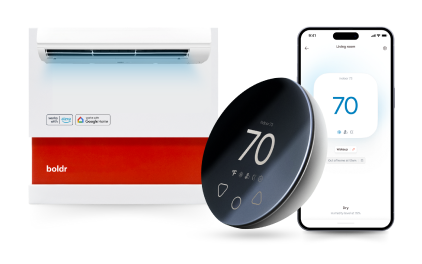
Klima - Smart Home Controller for Mini-splits, Air Conditioners and Heatpumps
Compatible with all brands of ACs and Mini-Splits Automate Climate Management Control remotely Reduce Energy Consumption Monitor bills in realtime
Try NowRecent Articles

Mini-Split Auto Mode Explained: What Does It Actually Do?
Auto mode on a mini-split allows the system to decide whether to he...
Read More
Heat Pump vs Mini-Split: What's the Difference in 2026?
Heat pump vs mini-split is one of the most commonly searched HVAC q...
Read More
Replacing Oil Based Heaters With a Mini-Split (2026 Guide)
Replacing an oil-fired furnace or boiler with a heat pump mini-spli...
Read More
Mini-Split for Wine Cellar: What Works and What Doesn't
A barndominium presents one of the most challenging residential HVA...
Read More
Mini-Split WiFi Keeps Disconnecting: Causes and Permanent Fix
A mini-split's WiFi disconnecting repeatedly — losing connection to...
Read More