






A mini-split is one of the most practical climate control solutions for a tiny home — it provides both heating and cooling, requires no ductwork, takes up no floor space, and can be sized precisely for small spaces. Most tiny homes need a single 9,000–12,000 BTU mini-split for efficient whole-home comfort. This guide covers sizing, installation considerations, and the best approaches for different tiny home configurations.
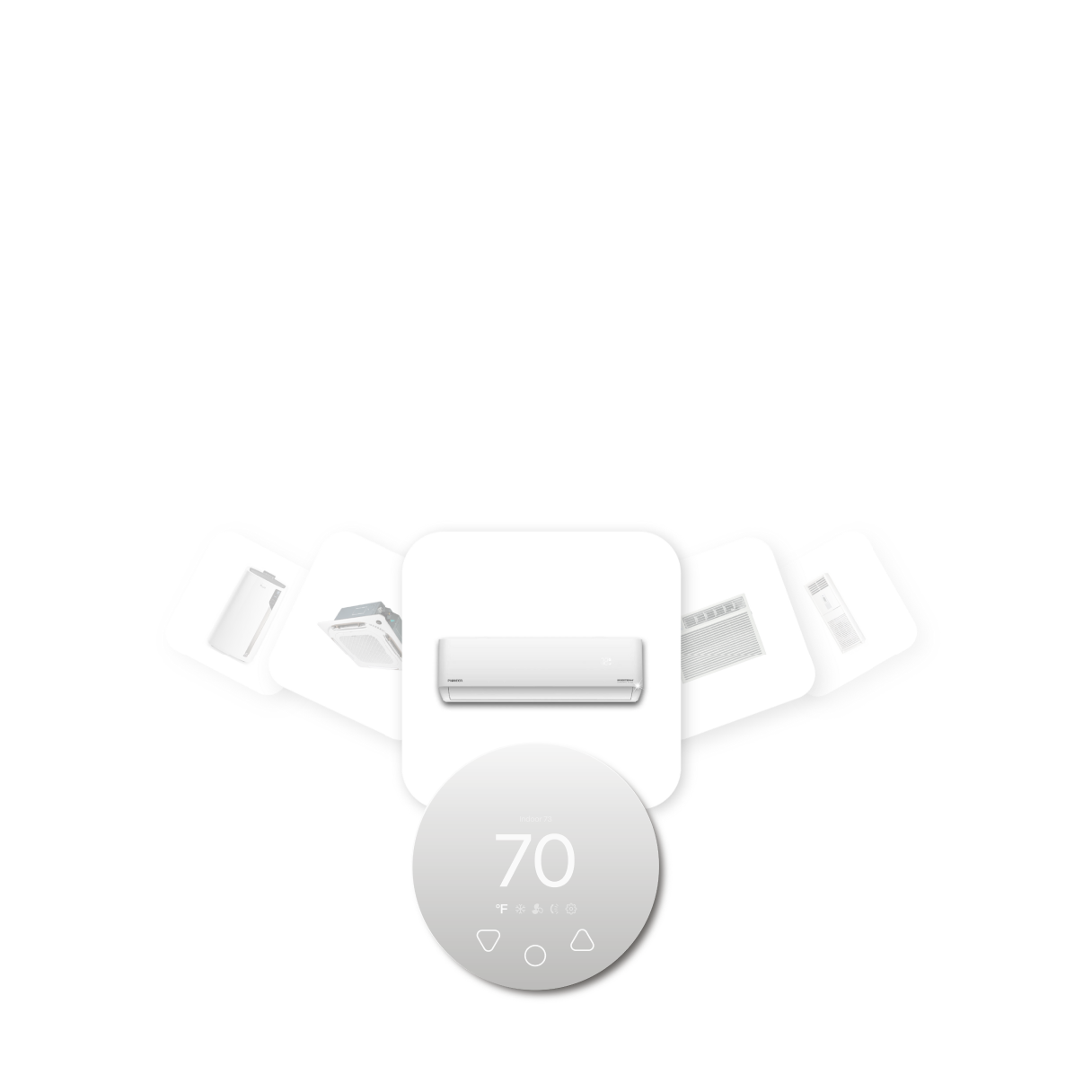
Compatible with all brands of ACs and Mini-Splits
Automate Climate Management
Control remotely
Reduce Energy Consumption
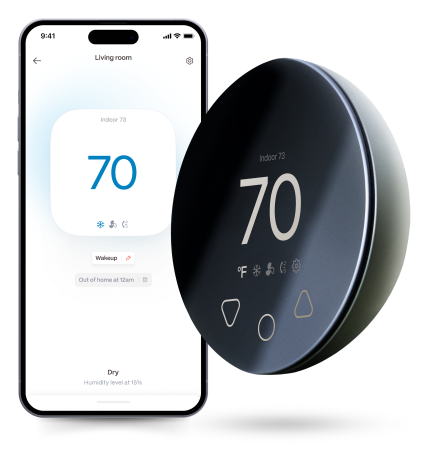
Monitor bills in realtimeKlima - Smart Home Thermostat for Mini-splits, Air Conditioners and Heatpumps
What Size Mini-Split for a Tiny Home?
| Tiny Home Size | Recommended BTU | Notes |
|---|---|---|
| Under 200 sq ft | 6,000–9,000 BTU | Very small spaces; may overshoot if oversized |
| 200–400 sq ft | 9,000–12,000 BTU | Most common tiny home range; single unit sufficient |
| 400–600 sq ft | 12,000–18,000 BTU | Larger tiny homes or those with poor insulation |
| 600+ sq ft | 18,000 BTU or 2-zone | Consider 2-zone system if separate sleeping area |
Important note on tiny home sizing: Avoid oversizing. A unit that is too large for the space will short-cycle — cooling the air quickly without adequate dehumidification — leaving the space cold and clammy. For a 200 sq ft well-insulated tiny home, a 9,000 BTU unit is almost always preferable to a 12,000 BTU unit.
Stay cool and save more. Use code JONES15 to get 15% off your entire order—no strings attached.
Upgrade your comfort with a Klima today.
Installation Considerations
- Wall thickness: Most tiny homes have thinner walls than standard construction. Verify the wall penetration depth is adequate for the mini-split's line set sleeve before purchasing.
- Outdoor unit placement: The outdoor unit needs a solid, level surface — a ground pad, deck bracket, or wall bracket. On a THOW (tiny home on wheels), the outdoor unit must be secured for travel or mounted on a trailer tongue bracket.
- Electrical: A mini-split requires a dedicated 230V circuit. Tiny homes on grid power need this circuit added by a licensed electrician. Off-grid tiny homes need a generator or solar/battery system capable of powering the unit (typically 1,500–2,500 watts minimum for a 9,000 BTU unit).
- Cold-climate models: Tiny homes in cold climates benefit from cold-climate mini-splits. Given the small space, even a 9,000 BTU cold-climate unit (Mitsubishi H2i, Daikin Aurora, LG LGRED°) is available and appropriate.
Mini-Split vs Other Options for Tiny Homes
| System | Heats? | Cools? | Space Required | Cost Installed |
|---|---|---|---|---|
| Mini-split | Yes | Yes | Wall space only | $2,500–$5,000 |
| Window AC | No | Yes | Window opening | $300–$600 |
| Propane heater | Yes | No | Floor or wall | $500–$1,500 |
| Wood stove | Yes | No | Significant floor space + chimney | $2,000–$5,000 |
Frequently Asked Questions
Can a mini-split run on solar power in a tiny home?
Yes — with the right solar and battery setup. A 9,000 BTU mini-split draws approximately 800–1,200 watts during operation. Running it for 8 hours per day requires roughly 7–10 kWh of daily energy. A typical off-grid tiny home solar system (2–4 kW of panels + 10–20 kWh of battery storage) can support a small mini-split through most of the year, with grid or generator backup for extended cloudy periods.
What is the best mini-split brand for a tiny home?
Any reputable brand with a 9,000 BTU single-zone model works well. For cold climates, prioritise cold-climate models from Mitsubishi, Daikin, LG, or Fujitsu. For budget-conscious tiny home builders, MrCool DIY offers a self-install option that reduces installation cost significantly.
Stay cool and save more. Use code JONES15 to get 15% off your entire order—no strings attached.
Upgrade your comfort with a Klima today.
Related reading:
→ Mini-Split for RV: Can You Install One? Full Guide
→ Mini-Split BTU Calculator: Sizing by Room
→ How Much Does a Mini-Split Cost? Full 2026 Guide


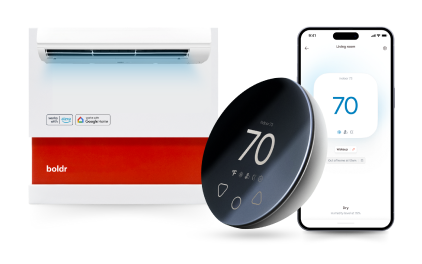
Klima - Smart Home Controller for Mini-splits, Air Conditioners and Heatpumps
Compatible with all brands of ACs and Mini-Splits Automate Climate Management Control remotely Reduce Energy Consumption Monitor bills in realtime
Try NowRecent Articles

Mini-Split Outdoor Unit Clearance 2026 Guide
A mini-split outdoor unit needs air. Lots of it. The condenser pull...
Read More
What Happens if Your Mini-Split Is Too Small?
Most homeowner sizing advice focuses on oversized mini-splits. But ...
Read More
Does a Mini-Split Need a Manual J Load Calculation?
A 500-square-foot room does not automatically need a 12,000 BTU min...
Read More
Signs Your Mini-Split May Have a Refrigerant Leak
A mini-split does not normally “use up” refrigerant the way a car u...
Read More
Mini-Split Minimum Capacity: Why It Matters
When homeowners compare mini-splits, they normally look at the bigg...
Read More