







"Mini-split" and "ductless" are used interchangeably — they mean the same thing. A mini-split is a ductless system; a ductless system is a mini-split. The terms describe the same technology from different angles: "ductless" emphasises the absence of ductwork, while "mini-split" describes the physical configuration (a split system with a compact outdoor unit). This article clarifies the terminology and explains related terms that are sometimes confused.
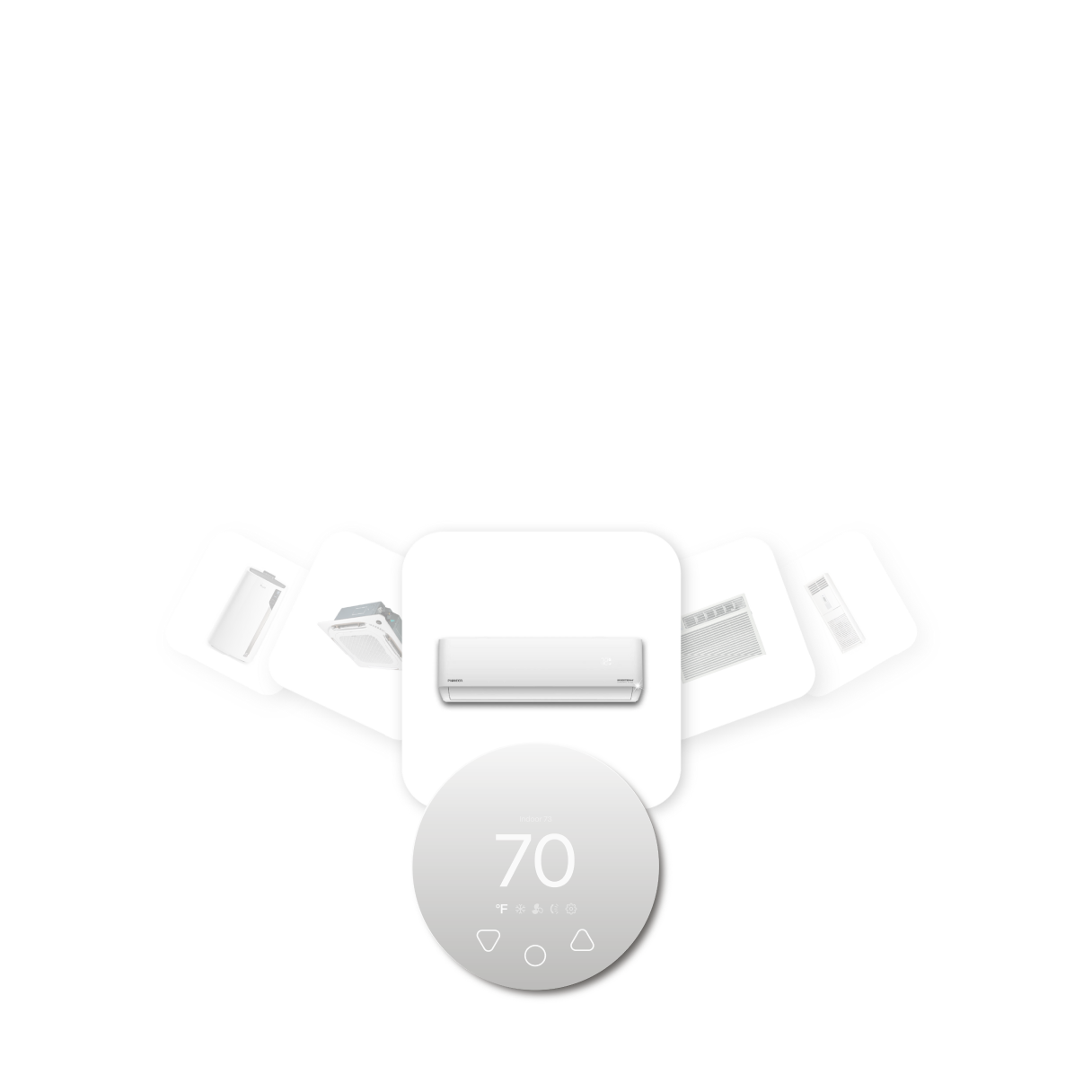
Compatible with all brands of ACs and Mini-Splits
Automate Climate Management
Control remotely
Reduce Energy Consumption
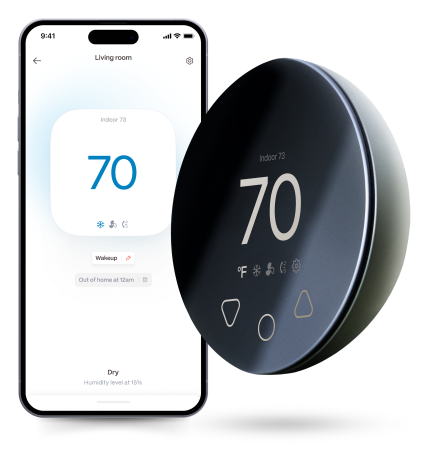
Monitor bills in realtimeKlima - Smart Home Thermostat for Mini-splits, Air Conditioners and Heatpumps
Mini-Split = Ductless: The Complete Picture
| Term | Meaning | Same As Mini-Split? |
|---|---|---|
| Mini-split | A split system (separate indoor and outdoor units) with a compact "mini" outdoor unit — ductless by design | Yes |
| Ductless | Any HVAC system that does not use ductwork to distribute conditioned air | Yes (in residential context) |
| Ductless heat pump | A mini-split that provides both heating and cooling (all modern residential mini-splits) | Yes |
| Ductless AC | A mini-split used in cooling-only mode; technically still a heat pump capable of both functions | Yes |
| VRF / VRV | Variable Refrigerant Flow — a commercial-scale ductless system; the large-building equivalent of a mini-split | Related but not the same — VRF is commercial-scale |
| Split system | Any HVAC system with separate indoor and outdoor units — includes both ducted central systems and ductless mini-splits | Not necessarily — ducted split systems are not mini-splits |
| Window AC | A self-contained cooling unit installed in a window opening; both indoor and outdoor components in one box | No — different technology and configuration |
Where the Term "Mini-Split" Comes From
The "split" in mini-split refers to the physical separation of the system into two units — the indoor air handler and the outdoor compressor/condenser. Traditional central HVAC systems also have split configurations (indoor air handler + outdoor AC unit), but they use ductwork to distribute conditioned air throughout the home. The "mini" distinguishes the compact residential outdoor unit from larger commercial split systems. When manufacturers and contractors say "ductless mini-split," they are being redundant — all mini-splits are ductless by definition.
Regional Terminology Variations
In the UK, Australia, and parts of Asia, the system is commonly called an "air conditioner" or "AC" even when it provides both heating and cooling — because the cooling function was the original and primary application. In North America, "heat pump" emphasises the heating capability. In Japan (where the technology was developed), the systems are called "エアコン" (aircon) regardless of heating use. All of these refer to the same ductless split-system technology.
Frequently Asked Questions
Is a ductless heat pump the same as a mini-split?
Yes — these terms are interchangeable in residential HVAC. A ductless heat pump is a mini-split used in heating mode; a mini-split is a ductless heat pump. The terminology that gets used depends on whether the speaker is emphasising the absence of ductwork or the heating function of the equipment.
What is the difference between a mini-split and a VRF system?
Both use ductless refrigerant-based technology, but VRF (Variable Refrigerant Flow) systems are commercial-scale — one large outdoor unit serving dozens of indoor units across a commercial building. Residential mini-splits serve 1–5 indoor units from one compact outdoor unit. The engineering principles are the same; the scale and complexity are different.
Related reading:
→ What Is a Mini-Split? Complete Beginner's Guide
→ Mini-Split Heat Pump: How It Works, Costs and Best Brands
→ Mini-Split vs Window AC: Cost, Efficiency and Comfort Compared


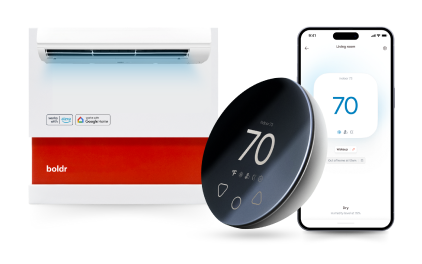
Klima - Smart Home Controller for Mini-splits, Air Conditioners and Heatpumps
Compatible with all brands of ACs and Mini-Splits Automate Climate Management Control remotely Reduce Energy Consumption Monitor bills in realtime
Try NowRecent Articles

Mini-Split Auto Mode Explained: What Does It Actually Do?
Auto mode on a mini-split allows the system to decide whether to he...
Read More
Heat Pump vs Mini-Split: What's the Difference in 2026?
Heat pump vs mini-split is one of the most commonly searched HVAC q...
Read More
Replacing Oil Based Heaters With a Mini-Split (2026 Guide)
Replacing an oil-fired furnace or boiler with a heat pump mini-spli...
Read More
Mini-Split for Wine Cellar: What Works and What Doesn't
A barndominium presents one of the most challenging residential HVA...
Read More
Mini-Split WiFi Keeps Disconnecting: Causes and Permanent Fix
A mini-split's WiFi disconnecting repeatedly — losing connection to...
Read More