







Portable air conditioners are attractive for one obvious reason:
They are portable.
Buy one, connect its exhaust hose to a window kit and cool the room without installing permanent outdoor HVAC equipment.
That flexibility makes them useful.
It does not make them equivalent to mini-splits.
DOE classifies portable air conditioners as a distinct product category with their own test procedure and federal efficiency requirements. Current federal standards for portable ACs have applied since January 10, 2025.
Portable AC Advantages
Minimal Building Modification
No refrigerant lines need to pass through the wall.
Useful for Renters
The system can potentially move with the occupant.
Lower Initial Cost
A portable unit generally costs less than a professionally installed mini-split.
Immediate Solution
It can be useful when cooling is needed quickly.
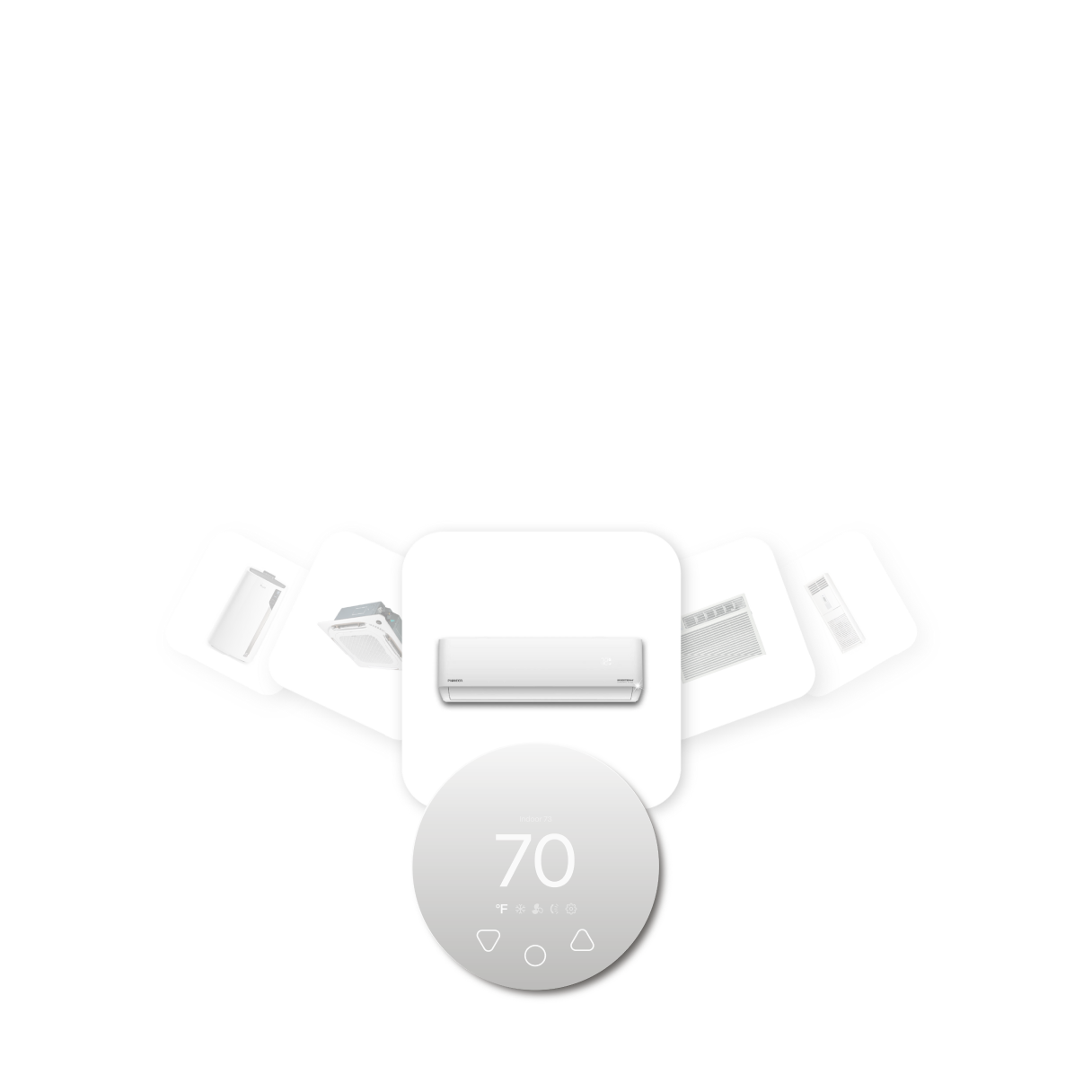
Compatible with all brands of ACs and Mini-Splits
Automate Climate Management
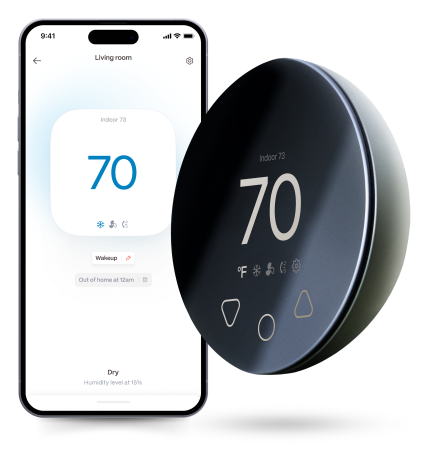
Control remotely
Reduce Energy Consumption
Monitor bills in realtimeKlima - Smart Home Thermostat for Mini-splits, Air Conditioners and Heatpumps
Portable AC Disadvantages
The Compressor Is Inside
Unlike a mini-split, the compressor sits in the conditioned room.
That can increase perceived noise.
Exhaust Hose
The portable unit must reject heat outdoors.
The hose:
- Occupies window space
- Adds heat to the room
- Needs proper sealing
Floor Space
The entire appliance remains inside the room.
Mini-Split Advantages
A mini-split places the compressor outside and can provide:
- Quiet indoor operation
- Heating and cooling
- Permanent installation
- Variable-speed control
- No large exhaust hose
- No occupied floor space
Mini-Split Disadvantages
Installation is significantly more involved.
It can require:
- Dedicated electrical circuit
- Outdoor mounting
- Refrigerant piping
- Drainage
- Professional labor
- Permits
Single-Hose vs Dual-Hose Portable AC
Portable units do not all behave identically.
The number and arrangement of hoses affect how room and outdoor air move through the appliance.
Compare DOE-tested performance rather than judging efficiency only from the headline BTU number.
DOE maintains a specific standardized test procedure for portable air-conditioner energy consumption.
Which Is Better for a Renter?
Portable AC usually wins when permanent modifications are prohibited.
However, if a rental already has an older mini-split, adding smart control may be much more practical than bringing in another cooling appliance.
Which Is Better for a Homeowner?
For a room that will need cooling every summer for many years, the mini-split's permanent installation, lower indoor noise and heating capability often make it a stronger long-term solution.
Which Is Better for a Bedroom?
Noise is usually the biggest differentiator.
With the mini-split compressor outside, the indoor environment can be significantly calmer than having a complete refrigeration appliance beside the bed.
Stay cool and save more. Use code JONES15 to get 15% off your entire order—no strings attached.
Upgrade your comfort with a Klima today.
Frequently Asked Questions
Is a portable AC cheaper?
Its initial purchase and installation costs are generally much lower.
Does a mini-split require a window?
No.
Which is quieter?
A mini-split moves the compressor outdoors, giving it an important advantage for bedrooms and offices.
Should I replace a working portable AC with a mini-split?
That depends on how frequently the room is conditioned, ownership status and whether the long-term comfort benefits justify installation.


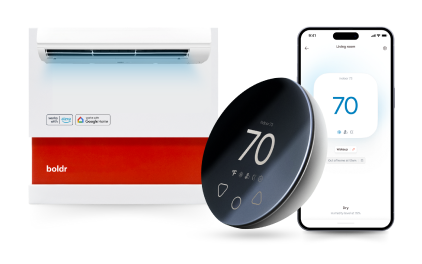
Klima - Smart Home Controller for Mini-splits, Air Conditioners and Heatpumps
Compatible with all brands of ACs and Mini-Splits Automate Climate Management Control remotely Reduce Energy Consumption Monitor bills in realtime
Try NowRecent Articles

Mini-Split Outdoor Unit Clearance 2026 Guide
A mini-split outdoor unit needs air. Lots of it. The condenser pull...
Read More
What Happens if Your Mini-Split Is Too Small?
Most homeowner sizing advice focuses on oversized mini-splits. But ...
Read More
Does a Mini-Split Need a Manual J Load Calculation?
A 500-square-foot room does not automatically need a 12,000 BTU min...
Read More
Signs Your Mini-Split May Have a Refrigerant Leak
A mini-split does not normally “use up” refrigerant the way a car u...
Read More
Mini-Split Minimum Capacity: Why It Matters
When homeowners compare mini-splits, they normally look at the bigg...
Read More