






Mini-splits are one of the best HVAC options for old houses because they provide heating and cooling without requiring ductwork. For homes built before the 1960s — often with boiler or radiator heat, electric baseboards, or no central HVAC at all — installing a mini-split is typically far cheaper and less invasive than adding ductwork. This guide covers what you need to know to install a mini-split in an older home.
Why Mini-Splits Work Well in Old Houses
Older homes present unique challenges for HVAC upgrades. Many have plaster walls, limited attic access, narrow wall cavities, and no place to route modern ductwork. Retrofitting central air into these homes typically costs $12,000–$25,000 and requires dropping ceilings, building soffits, or cutting into original architectural details.
A mini-split avoids all of this. The only structural requirement is a 3-inch hole through an exterior wall for the refrigerant line set. The indoor unit mounts flat against the wall, the outdoor unit sits on a pad or wall bracket outside, and the home's original character stays intact.
Typical Old-House Scenarios
| Existing Heat Source | Mini-Split Role | Typical Approach |
|---|---|---|
| Oil boiler with radiators | Primary heating + cooling | Keep boiler as backup; mini-split handles most hours |
| Electric baseboard | Full replacement | Mini-split replaces baseboard for 50–70% lower operating cost |
| Gas boiler with radiators | Cooling + supplemental heat | Keep boiler for heat; mini-split for cooling |
| No existing HVAC | Primary system | Multi-zone installation for whole-home comfort |
| Window ACs only | Full replacement | Mini-split provides quieter, more efficient cooling + heat |
Old-House-Specific Installation Considerations
- Wall material: Plaster walls, brick, stone, and concrete all require more care during drilling than modern drywall. Expect $100–$300 in additional labour for difficult wall materials.
- Electrical panel capacity: Many older homes have 100-amp panels that may be at or near capacity. Adding a dedicated 20–30 amp circuit for the mini-split may require a panel upgrade ($1,500–$3,000). An electrician can assess panel capacity during the quote.
- Insulation: Older homes often have minimal wall insulation. The heating and cooling load will be 20–40% higher than a modern home of the same size. Size the mini-split accordingly, or improve insulation before sizing.
- Window and door tightness: Leaky windows and doors increase the load further. Weather stripping and window replacement (if planned) should happen before or alongside the mini-split install for best efficiency.
- Historic district rules: If your home is in a historic district, there may be restrictions on visible outdoor unit placement. Check with your local historic commission before installation.
Sizing for an Older Home
The standard 20 BTU per square foot rule assumes well-insulated modern construction. For older homes, adjust upward:
- Pre-1940 with original insulation: add 25–40% to baseline BTU
- 1940s–1960s with minimal upgrades: add 15–25%
- Older home with added insulation: add 10–15%
- Older home with full modern retrofit: use baseline
A professional Manual J load calculation is especially valuable for old houses, where construction variables (actual insulation levels, air leakage rates, window quality) have the biggest impact on sizing.
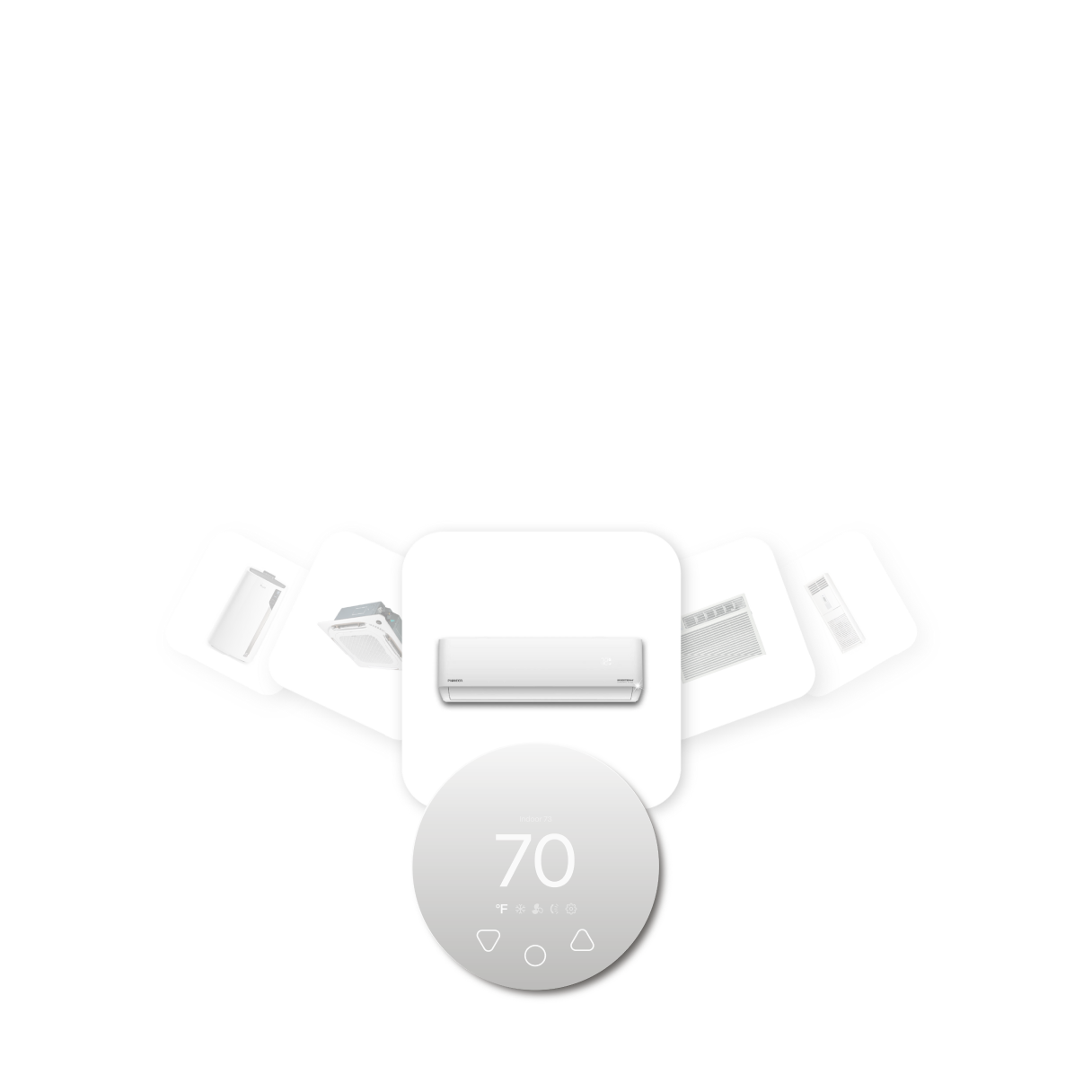
Compatible with all brands of ACs and Mini-Splits
Automate Climate Management
Control remotely
Reduce Energy Consumption
Monitor bills in realtimeKlima - Smart Home Thermostat for Mini-splits, Air Conditioners and Heatpumps

Multi-Zone for Old Houses
Older homes often have distinct rooms separated by doorways — very different from modern open-plan layouts. A multi-zone mini-split system matches this room-by-room structure naturally. Each zone operates independently, allowing you to condition only the rooms in use.
Typical multi-zone approach for a 1,500 sq ft older home:
- Zone 1: Living/dining area (12,000 BTU)
- Zone 2: Kitchen (if separate) (9,000 BTU)
- Zone 3: Master bedroom (9,000 BTU)
- Zone 4: Second bedroom or shared upstairs zone (9,000 BTU)
Cost Expectations for Old-House Installations
| System Type | Typical Cost (US, installed) |
|---|---|
| Single-zone (one main room) | $3,500–$6,000 |
| 2-zone (main floor + bedroom) | $6,500–$11,000 |
| 3–4 zone (whole home) | $10,000–$18,000 |
| Additional cost if panel upgrade needed | $1,500–$3,000 |
Old-house installations typically cost 10–20% more than equivalent modern home installations due to the challenges of working with older construction. Get multiple quotes and ask contractors about their experience with homes of your age.
Frequently Asked Questions
Can I install a mini-split in a 100-year-old house?
Yes. Mini-splits have been installed in homes built in the 1800s and earlier. The key is working with a contractor experienced in older homes who can navigate plaster walls, irregular stud spacing, and preservation requirements if applicable.
Will installing a mini-split damage original plaster?
With proper technique, damage is minimal — just the 3-inch line set hole. Experienced installers use plaster-appropriate bits and techniques to avoid cracking. Discuss plaster walls specifically when getting quotes.
Can I keep my existing boiler or radiators?
Yes. Many homeowners keep their existing heat source as backup and use the mini-split as the primary heating and cooling system. This is particularly common in cold climates where the boiler handles the coldest days and the mini-split handles the rest of the year.



Klima - Smart Home Controller for Mini-splits, Air Conditioners and Heatpumps
Compatible with all brands of ACs and Mini-Splits Automate Climate Management Control remotely Reduce Energy Consumption Monitor bills in realtime
Try NowRecent Articles

Mini-Split Outdoor Unit Clearance 2026 Guide
A mini-split outdoor unit needs air. Lots of it. The condenser pull...
Read More
What Happens if Your Mini-Split Is Too Small?
Most homeowner sizing advice focuses on oversized mini-splits. But ...
Read More
Does a Mini-Split Need a Manual J Load Calculation?
A 500-square-foot room does not automatically need a 12,000 BTU min...
Read More
Signs Your Mini-Split May Have a Refrigerant Leak
A mini-split does not normally “use up” refrigerant the way a car u...
Read More
Mini-Split Minimum Capacity: Why It Matters
When homeowners compare mini-splits, they normally look at the bigg...
Read More